

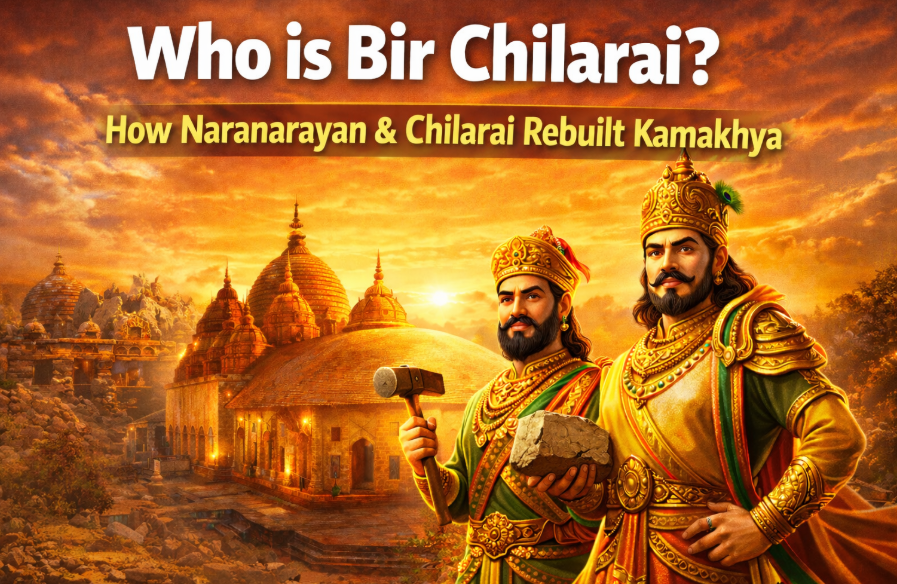
Bir Chilarai, Assam’s legendary warrior, was a fearless general whose bravery expanded the Koch kingdom across Northeast India. Born in 1510, his life of valor inspires Assamese pride today, celebrated annually on Chilarai Divas.
Who Was Bir Chilarai?
Real name Shukladhwaj, Bir Chilarai was the third son of Biswa Singha, founder of the Koch dynasty in Kamata kingdom (modern Assam, Bengal). Nicknamed “Chilarai” (kite king) for his swift cavalry attacks like a soaring kite, he served as commander-in-chief under elder brother Maharaja Nara Narayan. A Sanskrit scholar and Vaishnava patron, he protected saints like Srimanta Sankardev, marrying his niece into the family.
Early Life and Rise
Born around 1510 in Koch Bihar, Chilarai grew up in a royal family blending local and Bengali heritage—his mother was from Gaur royalty. Trained in warfare from youth, he earned fame through lightning raids, conquering foes before they could regroup. By 1550s, he led Koch armies, turning a small kingdom into a regional power.
Valour and Conquests
Chilarai’s military genius shone in key battles:
- Ahom Campaigns (1556-1563): Defeated Ahoms twice, reaching Lakhimpur and Dikhou; built a 400-mile road from Koch Bihar to Narayanpur.
- Regional Wins: Subdued Kacharis (Dimapur), Manipur, Jaintias, Tripura, Sylhet; kings surrendered without full fighting.
- Gaur Invasions: Captured Ghoraghat from Bengal Sultanate (1568, allied with Mughals under Akbar); defeated Gourpasha but was briefly captured by Kalapahar before rescue.
His tactics mixed land/naval forces, respecting defeated rulers while securing tributes. Under him, Koch empire peaked, funding temples like the rebuilt Kamakhya Temple.
| Major Battles | Opponent | Outcome |
| Ahom (1562) | Ahom Kingdom | Victory; truce signed |
| Kachari/Jaintia | Dimapur rulers | Territories annexed |
| Gaur (1568/1577) | Bengal Sultanate | Partial win; Ghoraghat seized |
Role of Srimanta Sankardeva and Chilarai alliance
Srimanta Sankardev, Assam’s Bhakti reformer, found vital protection from Bir Chilarai, forming a powerful alliance that safeguarded Neo-Vaishnavism during turbulent times. Chilarai’s patronage ensured Sankardev’s teachings spread widely in the Koch kingdom.
Background of Alliance
In the mid-16th century, Sankardev faced persecution from Ahom king Suklenmung (Gargayan Raja) for his egalitarian Ekasarana Dharma, challenging caste and rituals. After 14 years in Majuli, including tragedies like son-in-law Hari Jowai’s beheading, Sankardev fled persecution around 1560s. Chilarai, a devout Vaishnava and Koch general, welcomed him to Koch Bihar, recognizing his spiritual genius.
Key Support from Chilarai
Chilarai provided refuge, resources, and royal endorsement:
- Established Satras: Founded Bheladanga Satra for Sankardev’s rehabilitation in Koch Bihar, a hub for Vaishnavism that now has scattered satras in North Bengal.
- Personal Devotion: Took initiation (sarana) as Sankardev’s disciple; married his niece Kamalapriya to Sankardev’s family, blending royal and saintly lineages.
- Protection Amid Wars: Shielded Sankardev during Koch expansions against Ahoms and Bengal Sultanate, allowing focus on Kirtans, Borgeets, and Namghars.
Nara Narayan, Chilarai’s brother, also granted audience and support after Chilarai’s persuasion.
Cultural Impact
This partnership sparked Assam’s cultural renaissance:
- Neo-Vaishnavism flourished, promoting unity via Ankiya Naat plays and Bhaonas.
- Chilarai rebuilt Kamakhya Temple post-destructions, tying military valor to dharma preservation.
- Ensured Bhakti’s survival against orthodox Ahoms and Mughal threats, influencing Rajbanshi-Koch identity.
| Alliance Milestones | Role |
| Refuge Post-Persecution (1560s) | Chilarai offers Koch Bihar sanctuary |
| Bheladanga Satra | Chilarai establishes base for propagation |
| Family Marriage | Niece Kamalapriya weds into Sankardev family |
| Temple Rebuilds | Chilarai/Nara Narayan restore Kamakhya |
How did Naranarayan and Chilarai rebuild Kamakhya temple
Naranarayan and Chilarai rebuilt the Kamakhya Temple in the 16th century after its destruction, restoring Assam’s sacred Shakti Peeth through dedicated royal efforts
Destruction Background
The original temple, dating back centuries, was razed around 1553 by Muslim invader Kalapahar during temple raids across the region. Ruins lay scattered when Koch king Viswasingha (Naranarayan’s father) first revived worship in early 1500s, but full reconstruction waited for his sons.
Rebuilding Process
King Naranarayan (r. 1540–1587) initiated the project in 1555, completing it by 1565 with brother Chilarai’s supervision as military commander and devout patron. They reused original scattered stones for the base and chambers; architect Meghamukdam failed twice to restore the stone shikhara (tower), switching to durable brick masonry for the iconic beehive dome blending Nagara and local styles.
Key steps:
- Cleared ruins and revived rituals under Viswasingha’s initial push.
- Naranarayan funded expansion of three chambers (Kamakhya, Sundari, Tripura).
- Chilarai oversaw construction amid Koch expansions, tying it to Vaishnava revival with Sankardev.
Architectural Legacy
The present structure features a hemispherical dome, rock-cut Garbhagriha with no idol (Yoni Peeth), and 10 side shrines. Later Ahom kings like Rajeshwar Singha added gates, but Koch brothers’ work forms the core, symbolizing dharma’s triumph.
| Phase | Leaders | Contribution |
| Revival (1515-40) | Viswasingha | Discovered ruins, restarted worship |
| Main Build (1555-65) | Naranarayan/Chilarai | Full reconstruction, brick dome |
| Later Enhancements | Ahom Kings | Gates, expansions |
Death and Legacy
In 1571 (or 1577 per sources), during the second Gaur campaign on River Ganga banks, Chilarai died of smallpox at age 61. Nara Narayan split the kingdom: Koch Bihar (west) for himself, Koch Hajo (east) for Chilarai’s son Raghudev. His death ended Koch’s golden era, but valor lives in folklore as Assam’s unsung hero
Chilarai Divas Celebration
To honour the courageous and heroic deeds of the Great General of Assam, Chilarai’s Birth Anniversary is being observed as Bir Chilarai Divas every year on the full moon in the month of Magha, which usually falls in February in the Western calendar. State confers the Bir Chilarai Award, highest bravery honor, to modern heroes like police, firefighters. Events include seminars, cultural programs in schools, reenactments in Guwahati/Koch Bihar—perfect for APSC students studying Assam history.
Bir Chilarai embodies Assamese spirit: swift, strategic, devoted to dharma and culture.
Also See: Know about the Union Budget of India