

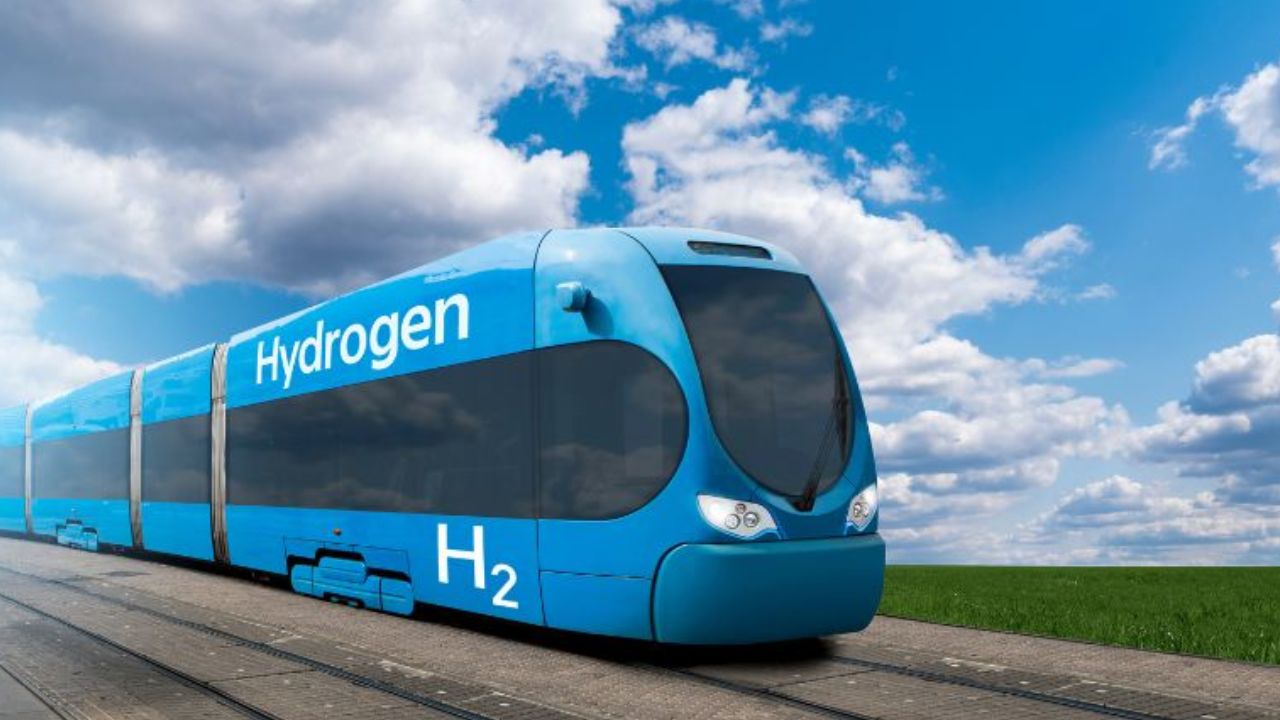
India is taking a big step towards eco-friendly travel with its first green hydrogen train. This exciting project by Indian Railways is part of the “Hydrogen for Heritage” initiative, aiming to make train travel greener and cleaner. Here’s everything you need to know about this game-changing technology in simple words.
What is a Green Hydrogen Train?
A green hydrogen train runs on hydrogen fuel cells instead of diesel or electricity from overhead wires. These cells mix hydrogen and oxygen to create electricity, powering the train’s motor. The only byproduct? Water vapor! That means zero carbon emissions, making it super eco-friendly.
Importance
India’s green hydrogen train is a global leader with a powerful 1,200 horsepower engine, stronger than most hydrogen trains worldwide (which typically have 500-600 horsepower). Designed by the Research, Design, and Standard Organisation (RDSO) and built at the Integral Coach Factory (ICF) in Chennai, this train shows India’s talent for innovation.
- Eco-Friendly: No smoke, no pollution, just water vapor.
- Perfect for Heritage Routes: It will run on scenic routes like Kalka-Shimla, Darjeeling Himalayan, and Nilgiri Mountain Railways, offering a green way to enjoy India’s beauty.
- Supports India’s Goals: This project aligns with India’s National Green Hydrogen Mission to produce 5 million metric tonnes of green hydrogen by 2030 and achieve net-zero carbon emissions by 2070.
Key Features of India’s Hydrogen Train
- Powerful Engine: 1,200 HP, making it the world’s most powerful hydrogen train.
- Passenger Capacity: Can carry up to 2,638 passengers with 8 coaches, including 3 for hydrogen storage and fuel cells.
- Speed: Up to 110 km/h, perfect for short-distance heritage routes.
- Zero Emissions: Only water vapor is released, reducing the carbon footprint.
- Retrofitted Design: Existing Diesel Electric Multiple Unit (DEMU) trains are upgraded with hydrogen fuel cells, saving costs and resources.
Where and When Will It Run?
The first hydrogen train was successfully tested at ICF, Chennai, and will soon run on the Jind-Sonipat route in Haryana. Trials started in December 2024, and full service is expected by mid-2025. Indian Railways plans to launch 35 hydrogen trains on heritage and hill routes, with more to come by 2047.
How Does It Work?
- Hydrogen Storage: Special tanks store hydrogen gas at high pressure.
- Fuel Cells: Hydrogen and oxygen combine to produce electricity and water vapor.
- Battery Support: A battery helps when extra power is needed, like going uphill.
Why Green Hydrogen?
Green hydrogen is made using renewable energy (like solar or wind) through a process called electrolysis. It’s clean, sustainable, and doesn’t harm the environment, unlike diesel or other fuels. This makes it perfect for India’s goal of a greener future.
Challenges and Costs
While green hydrogen trains are amazing, they come with challenges:
- High Initial Costs: Each train costs around ₹80 crore, with ₹70 crore for ground infrastructure like refueling stations.
- Production Costs: Green hydrogen is expensive to produce (around ₹492/kg), but costs are expected to drop as production scales up.
Despite these costs, the long-term benefits like lower fuel expenses, less pollution, and energy independence make it worth it.
India’s Global Impact
India is now among the few countries like Germany, France, Sweden, and China with hydrogen trains. Germany’s Alstom Coradia iLint, for example, has been running since 2018, but India’s train is more powerful and built with indigenous technology. This puts India on the map as a leader in sustainable rail tech.
The Future of Green Travel in India
The Hydrogen for Heritage project is just the start. Indian Railways aims to launch 50 hydrogen trains by 2047, supporting India’s net-zero carbon goal. Plus, a hydrogen production and refueling station in Jind, Haryana, by GreenH Electrolysis and Medha Servo Drives, will keep these trains running smoothly.
This initiative isn’t just about trains—it’s about cleaner air, sustainable tourism, and a healthier planet. Whether you’re a traveler or an eco-warrior, India’s green hydrogen train is something to get excited about!
FAQ: India’s First Green Hydrogen Plant
1. What is India’s first green hydrogen plant?
India’s first pure green hydrogen plant, commissioned on April 20, 2022, by Oil India Limited (OIL), is located at its Jorhat Pump Station in Assam. It produces 99.999% pure green hydrogen using renewable energy, with an initial capacity of 10 kg per day, expandable to 30 kg per day.
2. Are there plans for more green hydrogen plants in Assam?
Yes, SGEL Assam Renewable Energy Ltd, a joint venture between SJVN Green Energy Ltd and Assam Power Distribution Co. Ltd, plans to develop a 25 MW green hydrogen plant in Assam. A consultant will be engaged to create a detailed project report for this initiative.
Also See: Assam’s Kaziranga Ranks 3rd Globally in Tiger Density
Also See: Emergency in India: Types, History, President’s Rule in State