
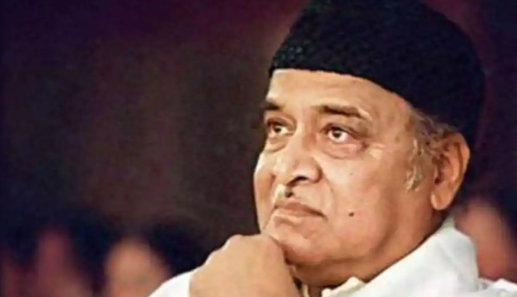
Dr. Bhupen Hazarika, fondly known as the “Bard of Brahmaputra” and “Sudhakantha” (nectar-voiced), was a legendary singer, composer, poet, filmmaker, and social reformer from Assam, India. His timeless music and art transcended borders, uniting people with messages of humanity, justice, and brotherhood. As we celebrate his 100th birth anniversary in 2025, this post dives into his remarkable life, enduring legacy, and recent events honoring his contributions.
Early Life and Background
Born on September 8, 1926, in Sadiya, a small village in Assam (near present-day Arunachal Pradesh), Bhupen Hazarika grew up immersed in the rich folk traditions of Assam. His mother’s lullabies and the cultural influence of Assamese icons like Rupkonwar Jyoti Prasad Agarwala and Kalaguru Bishnu Prasad Rabha shaped his artistic journey. At just 10 years old, he recorded his first song at All India Radio, Kolkata, showcasing his prodigious talent early on.
Hazarika’s education was equally impressive. He earned a degree from Banaras Hindu University and later completed his doctoral thesis at Columbia University, USA, reflecting his commitment to knowledge and innovation. His global exposure blended seamlessly with his deep-rooted love for Assam, which became a cornerstone of his work.
Musical and Artistic Contributions
Dr. Bhupen Hazarika was a polymath—a singer, lyricist, composer, poet, filmmaker, and journalist. His music carried universal themes of love, unity, and social justice, resonating with audiences across India and beyond. Songs like Bistirna Parore and Ganga Behti Ho Kyun became anthems of harmony, addressing issues like poverty, inequality, and human rights. His ability to blend Assamese folk traditions with contemporary themes made his work timeless.
Hazarika’s contributions extended to cinema and literature. He directed and composed music for several Assamese films, earning the prestigious Dadasaheb Phalke Award. His literary works, including poems and essays, reflected his deep social consciousness. He also served as an independent MLA in Assam in 1967, using his platform to advocate for the common man.
Musical Contributions
Dr. Hazarika’s music is his most celebrated legacy, with over 1,000 songs in Assamese, Bengali, Hindi, and other languages. His compositions combined Assam’s folk traditions, such as Bihu and Borgeet, with modern melodies, creating a unique style that appealed to diverse audiences. His songs addressed universal themes like unity, humanity, and social justice, making them timeless.
- Iconic Songs: Tracks like Bistirna Parore (about the Brahmaputra River’s vastness and human struggles), Ganga Behti Ho Kyun (questioning societal inequalities), and Manuhe Manuhar Babe (promoting human equality) became anthems of social change. These songs are still performed and reinterpreted by artists today.
- Multilingual Reach: Hazarika sang in multiple languages, including Assamese, Bengali, Hindi, and Bodo, breaking linguistic barriers. His Bengali songs, like Ami Ek Jajabor (I am a wanderer), are cherished in West Bengal and Bangladesh.
- Global Influence: While studying at Columbia University, Hazarika was influenced by American folk artists like Paul Robeson, whose protest songs inspired him to use music as a tool for social reform. His song Ganga Behti Ho Kyun was inspired by Robeson’s Ol’ Man River.
His music was not just entertainment but a call to action, addressing issues like poverty, caste discrimination, and communal harmony. He also composed for All India Radio and HMV records, leaving behind a rich archive of recordings.
Contributions to Indian Cinema
Hazarika was a pioneering filmmaker who enriched Assamese cinema with his storytelling and music. He directed and composed for several films, blending cultural narratives with social messages. His cinematic work earned him the prestigious Dadasaheb Phalke Award in 1992, India’s highest film honor.
- Notable Films: His debut film, Shakuntala (1961), was a musical masterpiece that showcased Assamese culture. Other films like Pratidhwani (1964) and Loti Ghoti (1966) addressed themes of identity and human struggle. His Hindi film Ek Pal (1986) featured stars like Shabana Azmi and Naseeruddin Shah, bringing Assamese sensibilities to a national audience.
- Music in Cinema: Hazarika’s film scores were groundbreaking, blending folk and classical elements. His songs in films like Rudaali (1993), with the iconic Dil Hoom Hoom Kare, gained national acclaim and introduced Assamese music to Bollywood audiences.
- Cultural Representation: Through his films, Hazarika portrayed Assam’s traditions, landscapes, and social issues, preserving the region’s heritage on celluloid.
His cinematic contributions helped Assamese cinema gain recognition on national and international platforms, paving the way for future filmmakers.
Literary and Poetic Contributions
Hazarika was a prolific poet and writer whose works reflected his deep understanding of human emotions and societal challenges. His poetry and essays, often written in Assamese and Bengali, carried messages of hope, resilience, and unity.
- Poetry: His poems, such as Asomiya Dekh (Assamese Nation), celebrated regional pride while advocating universal brotherhood. His lyrical poetry formed the backbone of his songs, blending simplicity with profound meaning.
- Books and Articles: As a journalist, Hazarika wrote for Assamese publications, addressing social and cultural issues. His doctoral thesis at Columbia University, The Role of Culture in National Integration, showcased his intellectual depth and commitment to unity through art.
- Translations: Many of his works have been translated into Hindi, Bengali, and English, ensuring his literary legacy reaches wider audiences.
His writings continue to inspire scholars, poets, and activists, with institutions like Tezpur University hosting events in 2025 to analyze his literary contributions.
Social and Political Contributions
Hazarika was a voice for the marginalized, using his art to advocate for social justice and equality. His work transcended entertainment, becoming a medium for change.
- Social Reform: His songs addressed issues like caste oppression, poverty, and communal harmony, encouraging listeners to reflect and act. For example, Manuhe Manuhar Babe called for equality among all humans, resonating with India’s diverse communities.
- Political Engagement: Hazarika served as an independent MLA in the Assam Legislative Assembly (1967–1972), where he championed the cause of the underprivileged. He used his political platform to advocate for Assam’s development and cultural preservation.
- Cultural Ambassador: As chairman of the Sangeet Natak Akademi (1998–2003), Hazarika promoted Indian performing arts. His international performances, including at the United Nations, showcased India’s cultural richness to the world.
His activism through art inspired movements for social justice, and his messages remain relevant in addressing contemporary issues like inequality and division.
Educational and Cultural Impact
Hazarika’s academic background and global exposure enriched his contributions. His time at Columbia University and Banaras Hindu University shaped his worldview, blending intellectual rigor with artistic expression.
- Educational Influence: His doctoral thesis explored how culture could foster national unity, a theme reflected in his music and films. Universities across India, including Girijananda Chowdhury University, continue to study his work in 2025, with essay competitions and seminars on his contributions.
- Cultural Preservation: Hazarika documented and popularized Assam’s folk traditions, ensuring they were not lost to modernization. His efforts helped preserve Bihu, Jhumur, and other folk forms for future generations.
- Mentorship: He inspired countless artists, from classical singers to modern musicians, to use art for social good. His collaborations with artists like Lata Mangeshkar and Bhupinder Singh elevated Assamese music’s national profile.
Awards and Recognition
Dr. Hazarika’s contributions were recognized with some of India’s highest honors:
- Padma Shri (1977)
- Padma Bhushan (2001)
- Padma Vibhushan (2012)
- Bharat Ratna (2019, posthumously)
- Dadasaheb Phalke Award for his contributions to Indian cinema
These accolades reflect his profound impact on Indian culture and society. The Bharat Ratna, India’s highest civilian award, cemented his legacy as a national treasure.
Legacy of Unity and Social Change
Hazarika’s legacy lies in his ability to bridge linguistic, cultural, and regional divides. His music gave voice to the marginalized, fostering unity across India’s diverse communities. He was a global citizen whose art spoke to universal values while staying deeply connected to Assam’s cultural identity. His songs continue to inspire young artists and activists to use art as a tool for social change.
The Bhupen Hazarika Setu, a bridge connecting Dhola and Sadiya in Assam, symbolizes his role in connecting people and cultures. His former residence in Kuthori, Kaziranga, has been handed over to local residents for preservation, ensuring his personal legacy endures.
Recent Events Celebrating His Centenary (2025)
In 2025, India is marking Dr. Bhupen Hazarika’s 100th birth anniversary with year-long celebrations, especially in Assam. Here are some key events:
- Commemorative Coin Release: On September 13, 2025, Prime Minister Narendra Modi released a ₹100 commemorative coin in Guwahati to honor Hazarika’s legacy. The coin features his portrait and the inscription “Dr Bhupen Hazarika Birth Centenary.”
- Bistirna Parore: A Musical Voyage: The Inland Waterways Authority of India launched a cultural journey along the Brahmaputra River, named after Hazarika’s iconic song. Starting in Dibrugarh, the initiative includes music, folk performances, and tributes from artists like Sunita Bhuyan and Anup Jalota.
- Mumbai Tribute Event: A grand event in Mumbai, curated by the Great Managers Institute and Assam Association, featured orchestral performances and the unveiling of a coffee table book and a biopic announcement. Artists like Suresh Wadkar performed Hazarika’s songs, and some of his iconic works were translated into Marathi.
- Guwahati and University Events: Girijananda Chowdhury University and Tezpur University hosted day-long programs, including essay competitions, art galleries, and dance performances. An All Assam Essay Writing Competition on “Humanism in Bhupen Hazarika’s Songs” saw Bhanita Kalita from Handique Girls College win first prize.
- Kolkata Tribute: Renowned music therapist Anubhuti Goswami and her husband Emon presented a soulful tribute in Kolkata, celebrating Hazarika’s healing music.
- Jorhat Archive: Avinibesh Sharma launched an archive and gallery in Jorhat, featuring Hazarika’s doctoral thesis, 70 books, and rare records, including his debut LP from 1969.
- Biography Release: A comprehensive biography, Bharat Ratna Bhupen Hazarika by Anuradha Sarma Pujari, was released by PM Modi. It highlights his contributions to music, cinema, and social causes, aiming to introduce his legacy to younger generations.
- Dibrugarh Public Address System: Dibrugarh district launched a public address system broadcasting Hazarika’s songs in the Borpukhuri area to keep his music alive in public spaces.
- Nationwide Tributes: Cultural events are planned in Delhi, Mumbai, Kolkata, Arunachal Pradesh, and Meghalaya, reflecting Hazarika’s national significance. Arunachal Pradesh paid tributes in Itanagar, with a state-level program scheduled for September 26 in Roing.
Why Bhupen Hazarika’s Legacy Matters Today
Dr. Bhupen Hazarika’s music and philosophy remain relevant in today’s divided world. His songs encourage unity, empathy, and social justice—values that resonate with younger generations. The ongoing centenary celebrations, from musical voyages to academic tributes, ensure his message reaches new audiences. By preserving his archives, translating his songs, and renaming landmarks like the Bhupen Hazarika Samannay Tirtha, India is committed to keeping his legacy alive.
Conclusion
Dr. Bhupen Hazarika was more than a musician—he was a cultural icon who used art to unite people and champion humanity. His life’s work continues to inspire through his songs, films, and writings. As India celebrates his 100th birth anniversary in 2025 with coins, biographies, and cultural events, his legacy as the Bard of Brahmaputra shines brighter than ever. Let’s honor his vision by embracing his message of love, unity, and social change.
Explore more about Dr. Bhupen Hazarika’s life and contributions through the ongoing centenary events across India!