
Emergencies in India are critical provisions under the Indian Constitution, designed to address extraordinary situations threatening the nation’s stability.
Types of Emergencies in India
The Indian Constitution, under Part XVIII (Articles 352–360), outlines three types of emergencies to safeguard the nation’s sovereignty, unity, and security:
- National Emergency (Article 352)
- Purpose: Proclaimed when India’s security is threatened by war, external aggression, or armed rebellion.
- Approval: Must be approved by both Houses of Parliament within one month. The 44th Amendment (1978) mandates a written Cabinet recommendation and replaced “internal disturbance” with “armed rebellion” to prevent misuse.
- Impact: Suspends certain fundamental rights (except Articles 20 and 21) and centralizes power with the Union government.
- State Emergency (President’s Rule, Article 356)
- Purpose: Imposed when a state government fails to function per constitutional provisions, often due to political instability, coalition breakdowns, or failure to elect a Chief Minister.
- Approval: Requires parliamentary approval within two months. It lasts six months initially, extendable up to three years with conditions (National Emergency or Election Commission certification).
- Impact: The state legislature is suspended or dissolved, and the Governor administers the state on behalf of the President.
- Financial Emergency (Article 360)
- Purpose: Declared if India’s financial stability or credit is threatened.
- Approval: Needs parliamentary approval within two months.
- Impact: The Union government can issue directions to states on financial matters, including salary reductions for public servants.
- Note: This has never been invoked in India.
Historical Instances of Emergencies in India
National Emergency
- 1962 (October 26–November 21): During the India-China War, due to external aggression.
- 1971: During the Indo-Pakistan War, for national security.
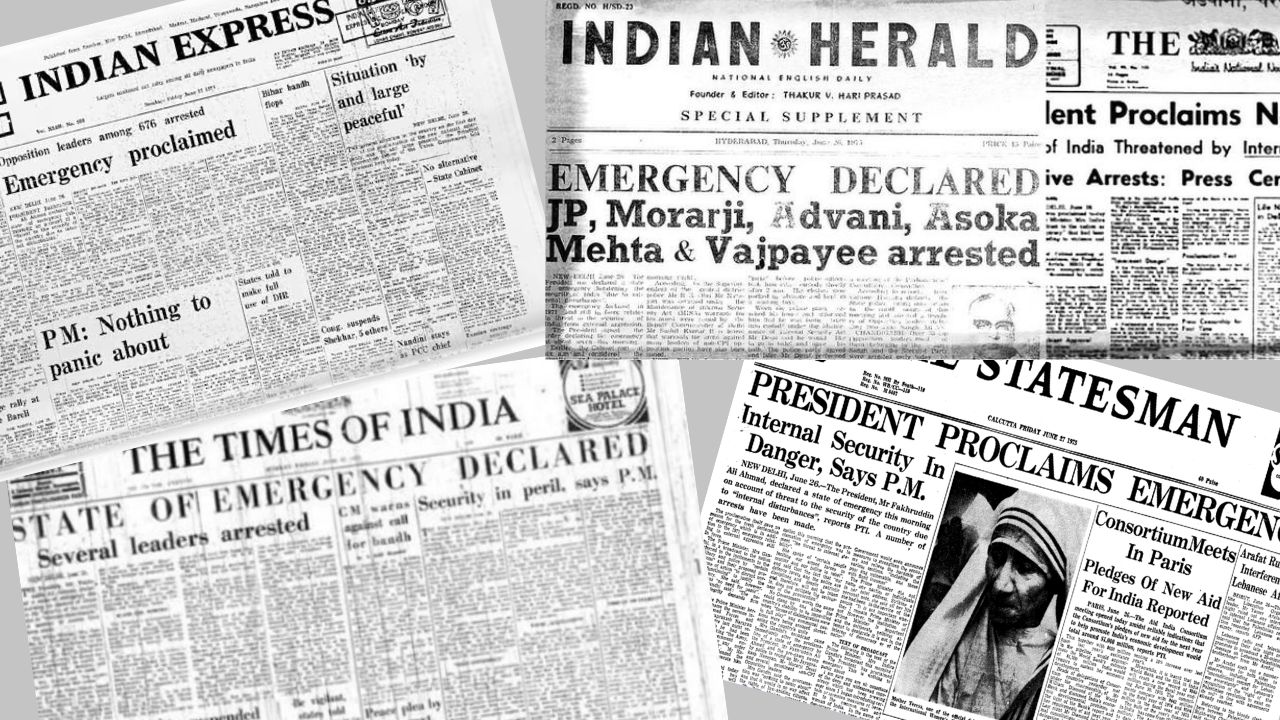
- 1975 (June 25–January 1977): Proclaimed by Prime Minister Indira Gandhi citing “internal disturbance” after the Allahabad High Court’s ruling against her election. This remains controversial for alleged misuse. The 44th Amendment (1978) introduced safeguards to limit such proclamations.
President’s Rule
Since 1950, President’s Rule has been imposed 134 times across 29 states and Union Territories (UTs). It was first used in Punjab on June 20, 1951. Key periods of frequent use include:
- 1966–1977: Indira Gandhi’s government imposed it 39 times, often targeting opposition-led states.
- 1977–1980: The Janata Party government imposed it 9 times, mostly in Congress-ruled states.
- Post-1994: The S.R. Bommai vs. Union of India (1994) Supreme Court ruling curbed misuse by subjecting proclamations to judicial review, reducing instances.
Financial Emergency
No instances have been recorded.
President’s Rule in Indian States (1950–2025)
Below is a comprehensive list of states and UTs where President’s Rule has been imposed, based on available data up to 2025:
- Andhra Pradesh: 5 times
- Arunachal Pradesh: 1 time
- Assam: 4 times (details below)
- Bihar: 8 times
- Chhattisgarh: 0 times
- Goa: 3 times
- Gujarat: 5 times
- Haryana: 3 times
- Himachal Pradesh: 2 times
- Jammu & Kashmir: 9 times (longest duration: 4,668 days)
- Jharkhand: 3 times
- Karnataka: 6 times
- Kerala: 5 times
- Madhya Pradesh: 3 times
- Maharashtra: 3 times
- Manipur: 11 times (highest frequency)
- Meghalaya: 1 time
- Mizoram: 2 times
- Nagaland: 2 times
- Odisha: 4 times
- Punjab: 8 times (3,878 days, second-longest duration)
- Rajasthan: 4 times
- Sikkim: 1 time
- Tamil Nadu: 4 times
- Telangana: 0 times
- Tripura: 1 time
- Uttar Pradesh: 10 times
- Uttarakhand: 2 times
- West Bengal: 3 times
- Union Territories:
- Puducherry: 7 times (2,739 days)
- Delhi: 3 times
- Andaman & Nicobar Islands, Chandigarh, etc.: Varies, with some instances under specific UT laws.
Note: Chhattisgarh and Telangana are the only states never under President’s Rule.
FAQs on President’s Rule in India
1. Which Indian State Has Faced the Maximum President’s Rule?
Answer: Manipur has faced President’s Rule the most, with 11 instances as of February 2025. This is followed closely by Uttar Pradesh with 10 instances. However, Jammu & Kashmir holds the record for the longest duration under President’s Rule (4,668 days), followed by Punjab (3,878 days).
2. How Many Times Has President’s Rule Been Imposed in Assam, and When?
Answer: President’s Rule has been imposed in Assam 4 times. The specific instances are:
- November 27, 1979–December 6, 1980: Due to political instability and coalition breakdown.
- March 19, 1982–February 27, 1983: Following communal violence and governance failure.
- December 30, 1990–June 30, 1991: Amid insurgency and law-and-order issues.
- June 28, 2001–March 8, 2002: Due to political instability after the collapse of the ruling coalition.
These periods reflect challenges like insurgency, ethnic clashes, and political crises in Assam.
Conclusion
Emergencies in India, governed by Articles 352, 356, and 360, are constitutional mechanisms to address crises but have sparked debates over federalism and misuse. National Emergencies have been rare but significant, while President’s Rule has been invoked 134 times, with Manipur leading in frequency. The S.R. Bommai case (1994) and the 44th Amendment (1978) have strengthened safeguards to ensure these provisions uphold constitutional order without undermining state autonomy. For further details on specific instances or legal frameworks, refer to authoritative sources like the Indian Constitution or government records.